

Artificial intelligence (AI) continues to revolutionize the way businesses, developers, and individuals operate. As we step into 2025, the landscape of AI tools has evolved dramatically, offering high-performance AI tools that enhance productivity, streamline workflows, and unlock new business opportunities. Whether you are a tech enthusiast, entrepreneur, or professional, understanding the top AI tools for 2025 is essential for staying ahead in the digital era.
In this guide, we will explore the best AI tools, emerging AI technology trends, and actionable insights to help you leverage artificial intelligence platforms effectively.
Why You Need the Best AI Tools in 2025
The adoption of AI tools is no longer optional—it’s a necessity. Businesses and individuals benefit from AI in multiple ways:
- Automation and Efficiency: Automating repetitive tasks saves time and reduces human error.
- Data-Driven Decisions: AI platforms analyze massive datasets to provide actionable insights.
- Enhanced Creativity: AI productivity tools assist in content creation, design, and marketing campaigns.
- Competitive Advantage: Leveraging cutting-edge Artificial Intelligence technology trends helps businesses stay ahead in their niche.
Top AI Tools for Businesses and Professionals
The market offers a wide range of top artificial intelligence software catering to diverse needs. Here are some of the most effective AI platforms in 2025:
1. ChatGPT for AI-Powered Communication
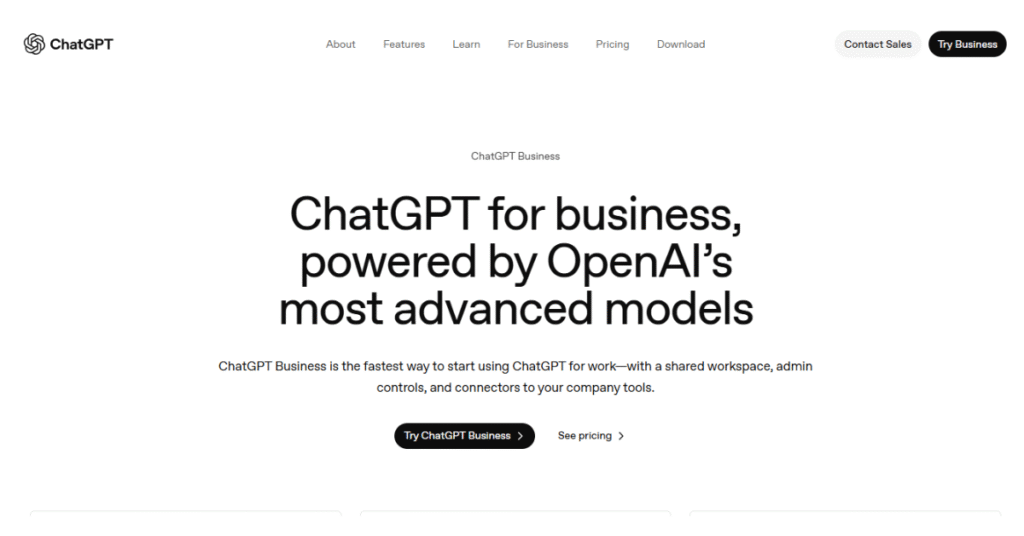
ChatGPT has become an industry standard for conversational AI. It enables businesses to:
- Automate customer support
- Generate human-like content
- Conduct advanced data analysis
Its integration with other AI productivity tools 2025 ensures a seamless workflow for marketing, customer engagement, and internal operations.
2. TensorFlow and PyTorch for AI Development
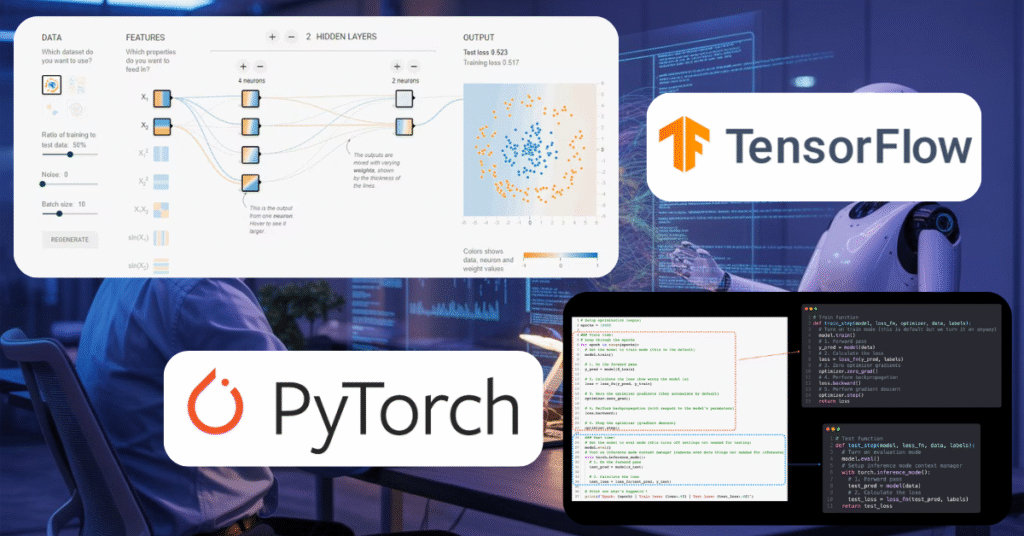
TensorFlow and PyTorch remain the go-to artificial intelligence platforms for developers. These tools allow:
- Deep learning model creation
- Image and speech recognition applications
- Advanced machine learning experiments
Developers use these platforms to build custom AI solutions that align with emerging AI technology trends.
3. Jasper AI for Content and Marketing
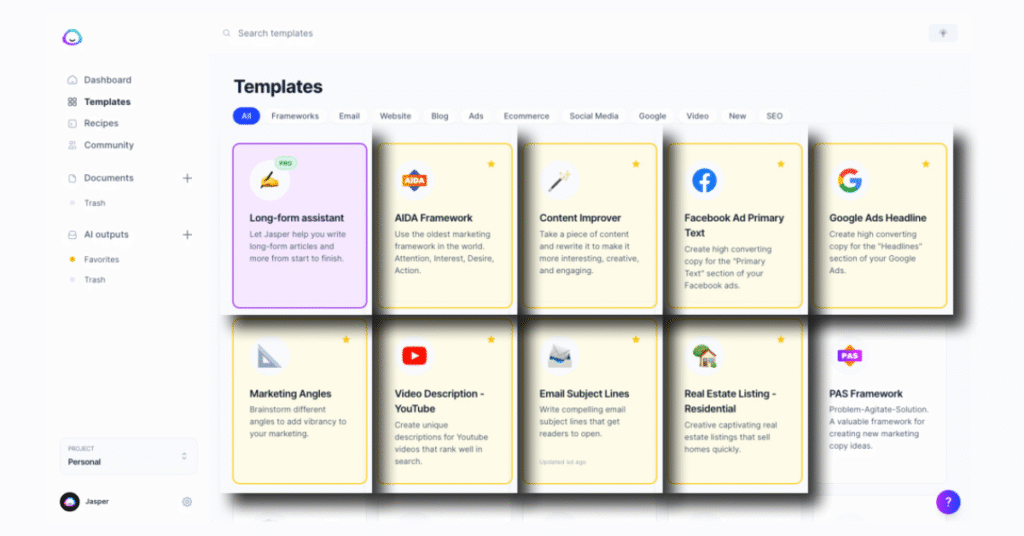
Jasper AI is a leading AI platform for marketers and content creators. Its features include:
- Automated blog writing
- Email campaigns
- Social media content generation
It integrates with other AI productivity tools 2025 to help businesses optimize their digital marketing strategies.
AI Technology Trends to Watch in 2025
The rapid evolution of AI is driven by new trends shaping how tools are developed and applied. Key AI technology trends include:
Generative AI and Creativity
In 2025, Generative AI is reshaping how we think about creativity — not just assisting human imagination but amplifying it. Technologies built on Generative Adversarial Networks (GANs) are now capable of producing lifelike art, music, and even hyper-realistic videos with remarkable precision. According to Wikipedia, GANs work through two neural networks — a generator and a discriminator — that compete and learn together to create increasingly realistic outputs. This dynamic process has given rise to new AI tools that empower artists, designers, and content creators to co-create with machines. From AI-powered image editors to music composition platforms, Generative AI is no longer just a technical marvel — it’s becoming a creative partner that helps transform raw ideas into stunning, real-world results.
Generative AI allows creating images, music, videos, and text with minimal human input. Tools like DALL·E and MidJourney are shaping the top AI tools landscape by boosting creativity.
AI-Powered Analytics

In 2025, AI-powered analytics is taking data-driven decision-making to a whole new level. Businesses are no longer just collecting data — they’re using artificial intelligence to predict, personalize, and act in real time. Predictive analytics uses advanced algorithms and machine learning techniques to analyze current and historical data, helping organizations forecast future trends and outcomes. Today’s top AI tools combine this capability with automation and natural language processing, allowing teams to turn complex datasets into actionable insights within seconds. Whether it’s anticipating customer behavior, optimizing marketing campaigns, or identifying business risks, AI-powered analytics tools in 2025 are empowering professionals to make smarter, faster, and more accurate decisions than ever before.
AI analytics platforms, such as DataRobot and H2O.ai, provide predictive insights for business growth. These high-performance AI tools help organizations make smarter decisions with real-time data processing.
AI Automation and Robotics
The year 2025 marks a turning point for AI automation and robotics, where machines are no longer just performing tasks — they’re learning, adapting, and collaborating with humans in smarter ways. From warehouse robots optimizing logistics to intelligent robotic arms assisting in healthcare and manufacturing, AI is driving a new era of precision and efficiency. These advancements combine machine learning, computer vision, and real-time data analytics to make robots more autonomous and decision-oriented. What’s fascinating is how AI automation is freeing humans from repetitive tasks, allowing them to focus on creativity, strategy, and innovation. As automation tools integrate seamlessly with business systems, the synergy between humans and intelligent machines is redefining productivity — not as replacement, but as true collaboration.
Robotic process automation (RPA) integrated with AI is transforming industries like manufacturing, healthcare, and logistics. This fusion of AI technology trends is improving efficiency and reducing costs.
How to Choose the Best AI Tools for Your Needs
Selecting the right AI platform depends on your goals and expertise. Consider these factors:
- Purpose: Identify if you need AI for marketing, analytics, customer support, or development.
- Integration: Ensure compatibility with existing workflows and productivity tools.
- Ease of Use: Opt for tools with intuitive interfaces and robust documentation.
- Scalability: Choose platforms that can handle increasing data loads.
- Support and Community: Access to tutorials, forums, and professional support is crucial for AI adoption.
Case Studies: Businesses Leveraging Top AI Tools
E-Commerce Success with AI Tools
An online retailer implemented AI-powered chatbots and predictive analytics, increasing sales by 25% in six months. Using high-performance AI tools, they optimized inventory, personalized recommendations, and automated customer interactions.
Content Marketing Enhancement
AI is transforming content marketing from a time-consuming process into a data-driven creative journey. Modern AI tools can now research trending topics, analyze audience intent, and even generate SEO-optimized blog posts, ad copies, and social media content in seconds — all while maintaining a natural human tone. These systems use natural language processing (NLP) and machine learning to understand user behavior, personalize messages, and predict which content will perform best across platforms. Marketers no longer rely solely on guesswork; instead, they harness AI-driven insights to create strategies that truly connect with their audience. The result? Smarter storytelling, consistent branding, and measurable engagement that helps businesses grow faster than ever before.
A digital agency integrated Jasper AI and ChatGPT to generate blogs, social posts, and email campaigns. This reduced content creation time by 40% while maintaining high engagement.
Future Outlook: AI Productivity Tools 2025 and Beyond

The future of AI productivity tools will emphasize:
- Hyperautomation: Combining AI, RPA, and cloud computing for end-to-end process automation.
- Explainable AI: Enhancing transparency in AI decision-making.
- AI Ethics and Security: Increased focus on ethical AI deployment and data privacy compliance.
Staying updated with top artificial intelligence software ensures businesses and professionals remain competitive in the rapidly evolving landscape.
FAQs about Best AI Tools 2025
Q1: What are the best AI tools for 2025?
A1: The best AI tools in 2025 include ChatGPT, Jasper AI, TensorFlow, PyTorch, DALL·E, MidJourney, and predictive analytics platforms like DataRobot and H2O.ai. These tools help automate tasks, analyze data, and enhance creativity.
Q2: Which AI tools are best for content creation?
A2: ChatGPT and Jasper AI are top choices for AI-powered content creation, offering features like automated blog writing, social media content generation, and email campaign assistance.
Q3: How do businesses benefit from AI productivity tools?
A3: AI productivity tools improve efficiency, reduce costs, automate repetitive tasks, enhance decision-making through analytics, and increase overall business performance.
Q4: Are AI platforms like TensorFlow and PyTorch suitable for beginners?
A4: While TensorFlow and PyTorch are powerful, they require some programming knowledge. Beginners can start with pre-built models or AI platforms with user-friendly interfaces like Jasper AI.
Q5: What trends in AI should I watch in 2025?
A5: Key trends include generative AI, AI-powered analytics, robotic process automation, hyperautomation, explainable AI, and ethical AI practices.


Comments (1)
How to Find High-Quality Business Leads (Complete Guide) - Easyblogspotsays:
November 22, 2025 at 5:40 am[…] 👉 Recommended internal link: Free email marketing tools […]