
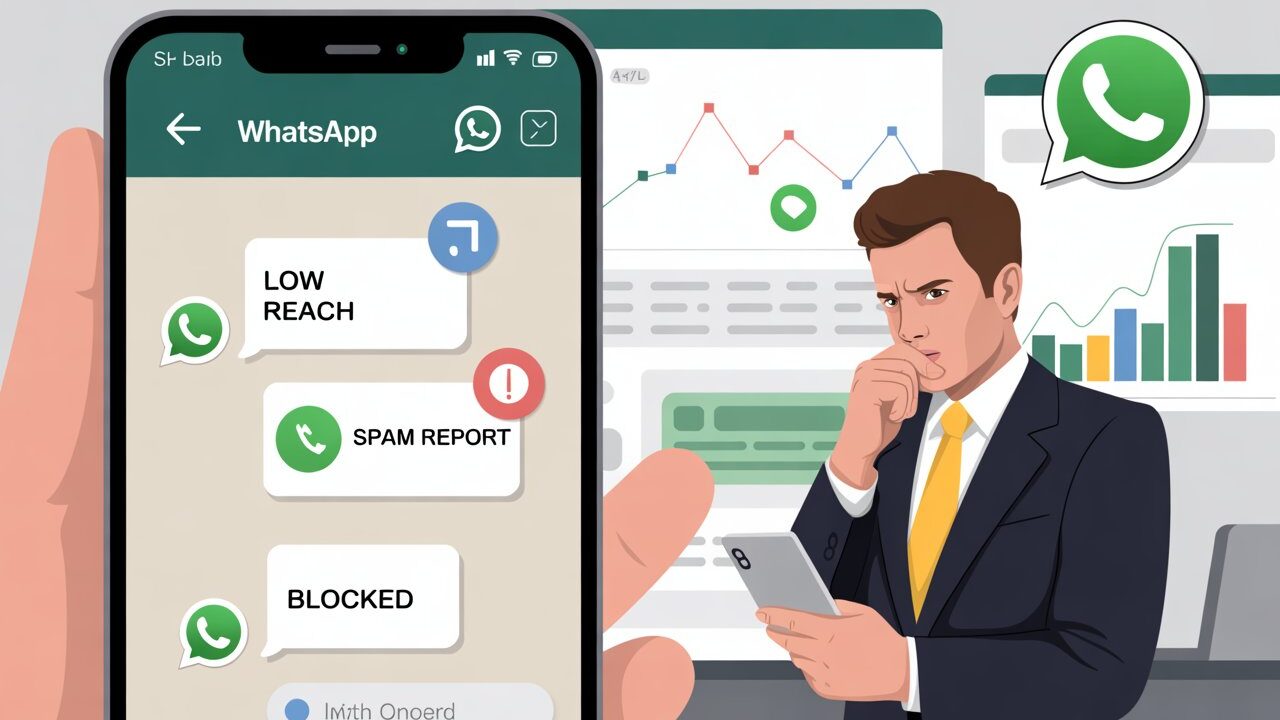
WhatsApp Marketing Mistakes are one of the biggest reasons brands fail to see results on a platform that otherwise delivers 3–5x higher engagement than email or SMS. While WhatsApp has over 2.7 billion active users globally, many businesses struggle with low reach, blocked numbers, spam complaints, and poor conversions.
If you’ve ever wondered why WhatsApp marketing fails, the answer is usually not the platform—it’s how it’s used.
This guide breaks down the most common WhatsApp marketing mistakes, explains why they hurt your growth, and shows how to fix them with practical, proven strategies.
Why WhatsApp Marketing Fails for Most Businesses
WhatsApp is a permission-based communication channel, not a broadcast advertising platform.
Brands that treat it like email or SMS often face:
- Message blocking and account bans
- Low open and reply rates
- Negative brand perception
- Poor ROI
Understanding WhatsApp marketing mistakes early helps you avoid costly errors and build long-term trust with users.
1. Sending Messages Without Proper User Consent
WhatsApp Spam Issues That Kill Trust
One of the biggest WhatsApp marketing mistakes is messaging users without explicit opt-in. WhatsApp has strict policies against unsolicited messages.
Why this fails:
- Users report your number as spam
- WhatsApp reduces message delivery
- Your account risks permanent ban
How to fix it:
- Use clear opt-in forms (website, ads, checkout pages)
- Mention what type of messages users will receive
- Store consent records
📌 According to WhatsApp’s official policy, businesses must obtain “active user consent” before messaging.
2. Treating WhatsApp Like Email Marketing
WhatsApp Business Errors That Reduce Engagement
Many businesses copy-paste email newsletters into WhatsApp. This is a critical WhatsApp marketing mistake.
Why WhatsApp vs email marketing is different:
- WhatsApp is conversational, not promotional
- Users expect quick, relevant messages
- Long-form content gets ignored
Best practice:
- Use short, value-focused messages
- Ask questions to start conversations
- Personalize using names and actions
📊 WhatsApp messages have an average open rate of 90%+, compared to email’s 20–30% (Forbes).
3. Overusing Broadcast Messages
Why Excessive Broadcasting Hurts WhatsApp Reach
Broadcast abuse is one of the most common WhatsApp marketing mistakes causing low reach problems.
What goes wrong:
- WhatsApp throttles delivery
- Messages land late or not at all
- Users mute or block your number
Smarter alternative:
- Segment users by interest and behavior
- Use WhatsApp automation funnels
- Trigger messages based on user actions
4. Ignoring WhatsApp Business Tools & Analytics
WhatsApp Business Errors That Limit Growth
Not using WhatsApp Business features properly is a silent growth killer.
Common mistakes include:
- No automated greetings or away messages
- No labels or chat segmentation
- Ignoring read and response metrics
Fix it by using:
- Quick replies for FAQs
- Labels for lead stages
- Analytics to optimize message timing
5. Poor Message Timing & Frequency
WhatsApp Marketing Mistakes That Annoy Users
Sending messages at the wrong time is another major WhatsApp marketing mistake.
Examples of bad timing:
- Late-night promotional messages
- Too many messages in one day
- No frequency control
Best practices:
- Send messages during business hours
- Limit promotions to 1–2 per week
- Let users choose preferences
📊 Businesses that respect timing see up to 35% higher reply rates.
6. No Clear Call-to-Action
Why WhatsApp Marketing Fails to Convert
Many campaigns fail because users don’t know what to do next.
Weak CTAs:
- “Check this out”
- “Let us know”
High-converting CTAs:
- “Reply YES to get the offer”
- “Click to book your slot”
- “Choose option 1, 2, or 3”
This small fix alone can double your conversions.
Final Thoughts
WhatsApp remains one of the most powerful marketing channels available today—but only when it’s used the right way. Most WhatsApp marketing mistakes happen when businesses ignore consent, overuse broadcasts, send poorly timed messages, or fail to create real conversations. These errors don’t just lower reach; they damage trust, reduce engagement, and can even put your business account at risk.
READ MORE: Why WhatsApp Funnels Are Replacing Email Marketing in 2026
FAQs
The most common WhatsApp marketing mistakes include messaging without opt-in, sending spammy broadcasts, poor timing, and treating WhatsApp like email instead of a conversation tool.
WhatsApp marketing fails mainly due to spam complaints, low personalization, ignoring platform rules, and lack of clear CTAs.
Yes, WhatsApp can block or permanently ban accounts that send unsolicited messages or violate its business messaging policies.
Always collect explicit user consent, limit message frequency, segment users, and send relevant content only.
Low reach problems occur due to over-broadcasting, poor engagement history, spam reports, or inactive contacts.
WhatsApp usually outperforms email in open and response rates, but only when used correctly with consent and personalization.
Beginners often ignore automation tools, analytics, labels, and quick replies, leading to poor scalability.
Ideally, send 1–2 promotional messages per week and use conversational or transactional messages as needed.
Yes, when done correctly, WhatsApp marketing is highly effective for small businesses due to high engagement and low cost.
A permission-based, segmented, automated, and conversational approach delivers the best long-term results.


Comments (2)
How to Build a WhatsApp Chatbot for Sales in 2026says:
January 1, 2026 at 5:35 pm[…] READ MORE:Top WhatsApp Marketing Mistakes Businesses Should Avoid […]
7 Best WhatsApp API Tools for Indian Businesses Comparedsays:
May 24, 2026 at 8:34 am[…] most common billing mistakes Indian businesses make with WhatsApp marketing, read our breakdown of WhatsApp marketing mistakes that cost Indian businesses money before you commit to any […]